Discovering the Makgadikgadi Salt Pans in Nata, Botswana On the day marking one week since my departure, we visited the Makgadikgadi Salt Pans in Nata, Botswana.
Starting the day the best possible way
For the first time in what felt like ages, my alarm woke me up. Not people waking up two hours before we were supposed to leave. Not my tent partner. It was wonderful. It was 6.30h in the morning and the day looked promising. I had some dry cereals with fruit (my lactose free milk had gone missing), and by 7 the tents were down and we were on our way to Nata.
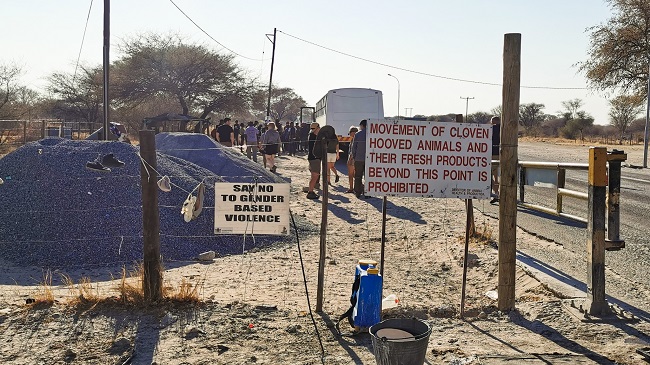
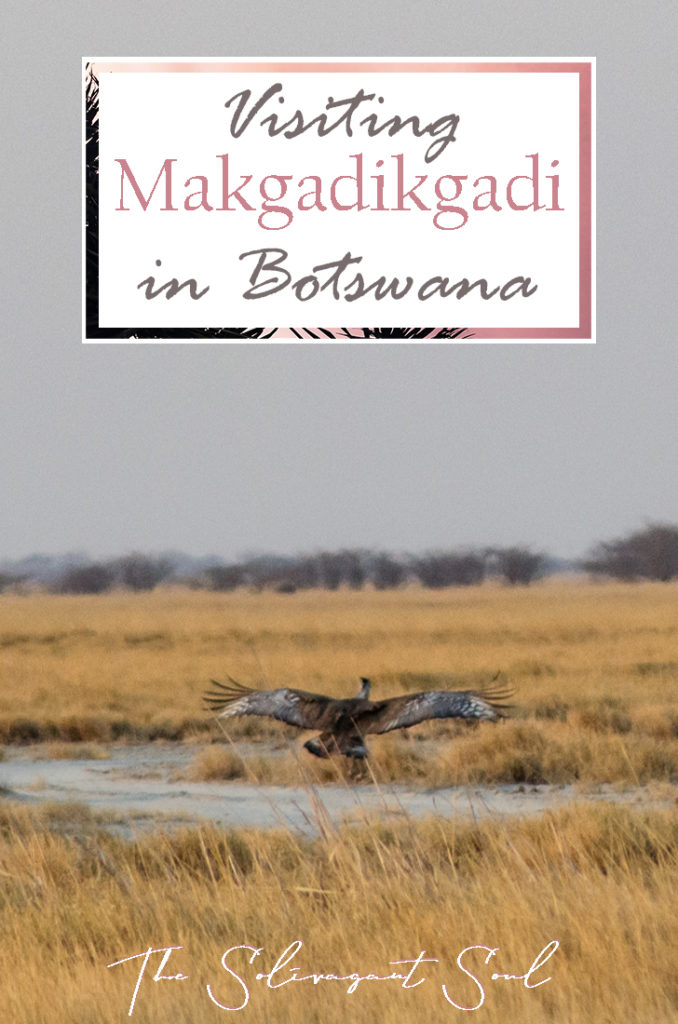
As we were leaving, G told us that we were going to pass a more restrictive control for foot and mouth disease. In this case, we had to disinfect all our shoes before passing the border. Soon after leaving Maun and passed this control, we found a group of vultures and another one of giraffes. While doing so, G told us about the importance that vultures have on the maintenance of the ecosystem in Africa. When animals die, vultures make sure to clean their carcasses avoiding the spread of diseases to others animals.
Then I asked where were their bones. I suddenly realized that many animals must die every day and we had only seen a few skulls here and there. I understood that vultures would take care of the meat but the bones would have been left behind. Turns out that hyenas are responsible for this. It is beautiful how nature takes care of everything, right?
Wondering if you should take a similar trip to this one but afraid to travel solo? Here you have some reasons why you should give it a go!
Centuries old trees
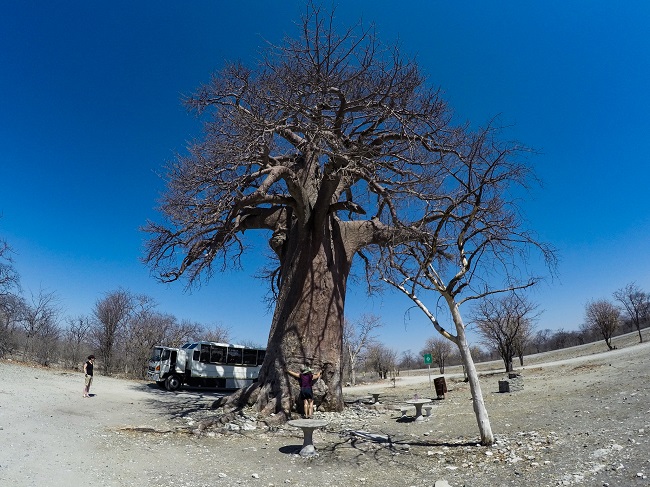
On our way to Nata, we made a bushy-busy stop near an amazing baobab more than 300 year-old. It was lovely although many (terrible) people, had decided to write their name there with a knife. Interestingly, most of the trees around the baobab were low and formed a uniform gray landscape that I have never seen before or after.
Creeps in Nata, Botswana
We arrived to Nata a bit before lunch. We mounted the tents and a few people went on to the hotel reception to upgrade. Next to our campsite there was a beautiful set of cabins, unfortunately, there was only space for one couple to upgrade. Which was enough for me to sleep alone, so… Soon after finishing setting up the tents I took a trip to the bathroom. There, the paranoia started. There was this beautiful sign explaining the different levels of venom that the local scorpions had. We were in the middle of the desert, we had been warned before regarding snakes, and now scorpions? Ugh!
After I went back and I asked E, our driver, about these creepers, he told me to make sure to move the tent before starting to roll it tomorrow morning. These guys love to hide under them, especially at night, and they can bite when you bother them. Thankfully he also told me that outside this situation, we should be safe. Fingers crossed.
Refreshments by the pool
As I just mentioned, we were in the middle of the desert. And it was WARM. By the time we were done with the tents the temperature might have been in its mid-forties (110°F and up). Because it was so warm, we were told we would be leaving for our late-afternoon game drive later on the day. At around 4.30.
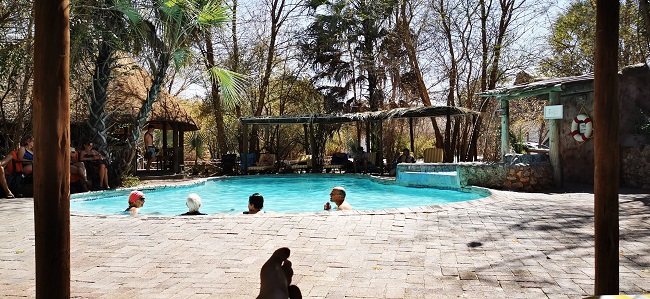
With almost five hours in our hands, I decided to explore the grounds of the hotel. It was then when I discovered a fantastic pool behind the reception. It was not big, but there were some hammocks around it. Great WiFi and extremely cold water. It was heaven. Not an hour had passed when the whole group was in or around the pool. I even had a little nap.
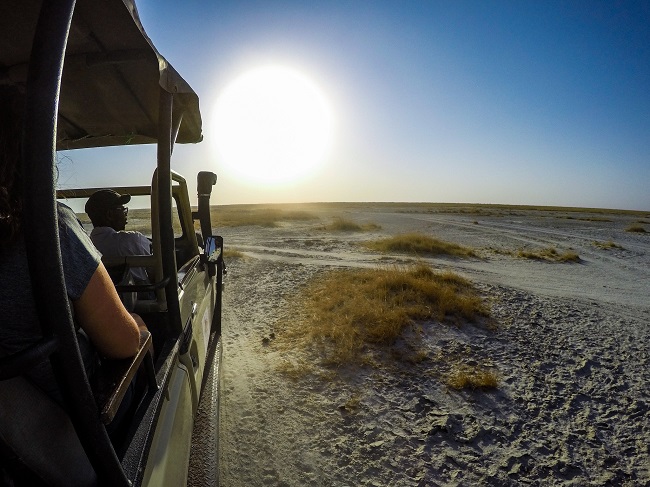
Soon after 4pm we were all ready to go to the tour. We waited in front of the reception for a few minutes and then three open cars came to pick us up. We randomly split into seven people groups and then jumped into the cars to discover the Makgadikgadi Salt Pans.
Game drive around the Makgadikgadi Salt Pans
Our guide was the worst one in the whole trip. He had a script and that was everything he said, you would ask him something and he would not answer. He drove extremely aggressively and got far too close to the animals. Which eventually led to the wildlife running away from us in multiple occasions.
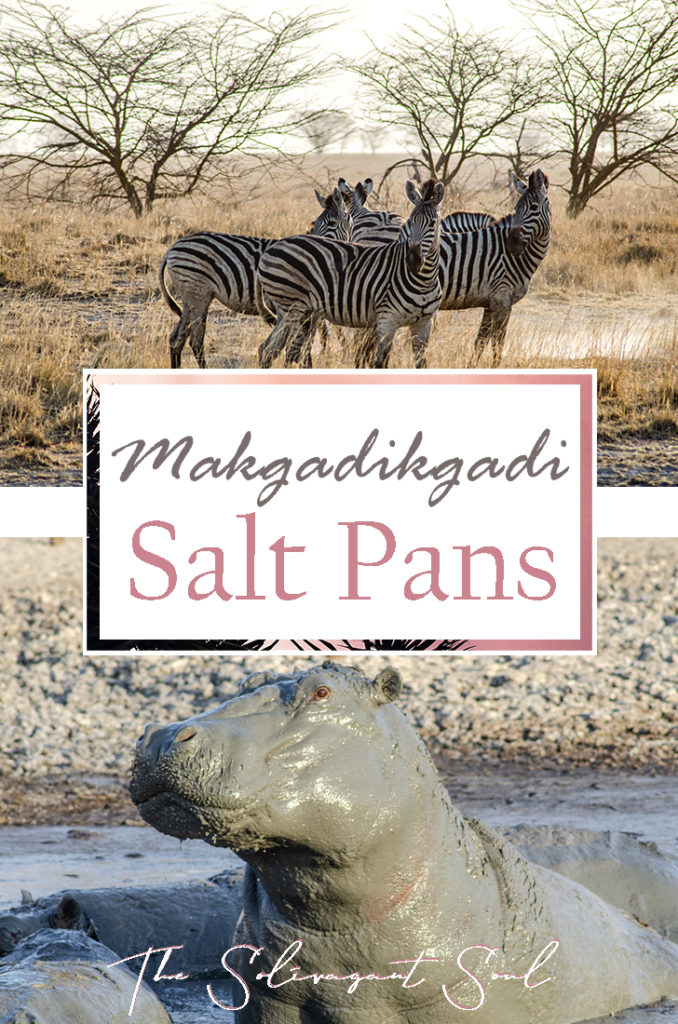
We saw a few ostriches running parallel to us. A few wildebeest that also run away from us as soon as we got close to them. At some point during our trip we saw a group of hippos in the mud. C screamed at the driver to stop, that we wanted to see them. And his response was to just laugh and say “relax”. Then continue moving on as if nothing had happened. That felt quite rude.
Seeing the effects of the drough
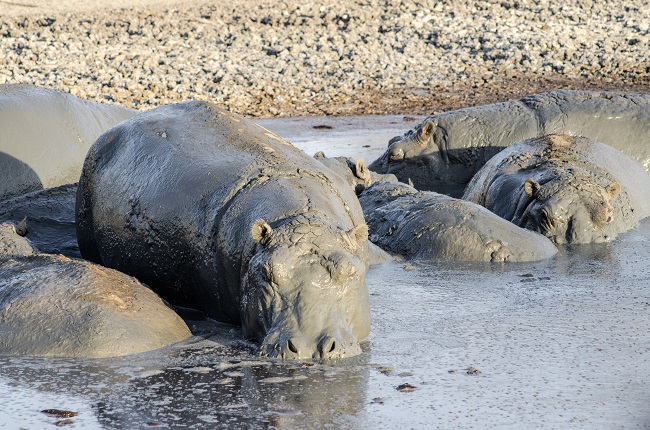
A few minutes later, we headed back to the other side of the river and then we saw the hippos from the other end. While he could has told us back then that we were moving to another location, he just ignored us and played cocky. Once there, we took many pictures and realized how dry Botswana really was.
The group of 11 hippos were in a small pond of mud, barely covered. In addition, there was the skeleton of a smaller baby hippo nearby and a few vultures waiting for their next victim. Usually, the water would be covering most of the area of the salt pans, but that late into the dry season, there was not enough water as it was.
Interestingly, another thing missing from the Makgadikgadi Salt Pans were termite hills. These formations that had become a common part of the landscape in Botswana were missing in Nata. I guess the soil was too salty for them to thrive?
Sunset in the Makgadikgadi Salt Pans
As the sun was getting low, our driver took us, in silence, to the Makgadikgadi Salt Pans. There, we had the right to one drink while the sun was setting. Not all the vehicles took the same pathway and then we realized that we were missing a third of our group. We asked, but no one knew what was had happened.
Do you want to read about how I survived a waterbuffalo chasing us down? Read more about it here!
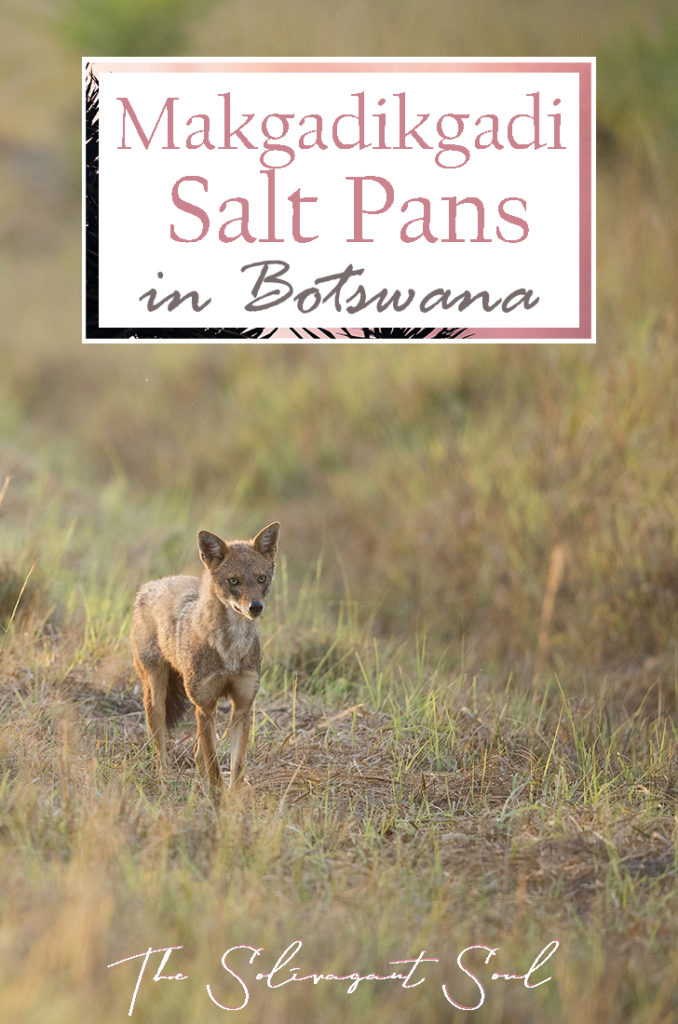
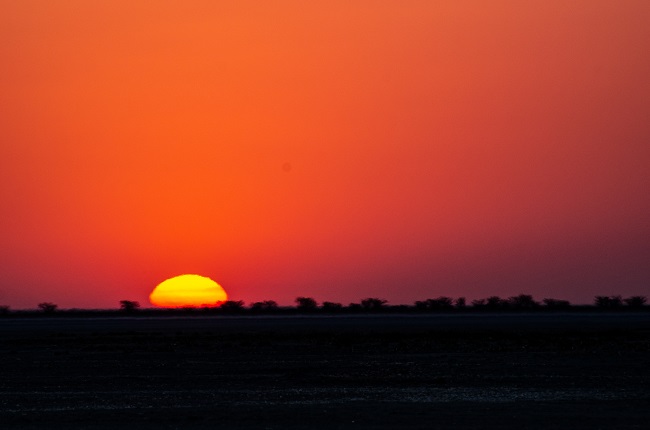
For about half an hour, we took some pictures of the sun going down. Having a beer, and just relaxing. Then, we started our way back to the entrance of the park. During this time, two things occurred. First, we stopped once to watch a jackal walking around distractedly. Second, as the light was disappearing, I realized that we were driving without front lights. Soon after that, we were rolling through the Makgadikgadi Salt Pans at full speed in almost complete darkness.
Saying that I did not enjoy that drive is an understatement. Some people were saying that maybe it was so that we could see the stars. I wasn’t sure about it… and I was right. As we got to the entrance of the park, the driver stopped and asked the guard there to fix something on his front lights. Less than a minute after that, we were moving again with normal lights. Couldn’t he have done the same thirty minutes earlier?
Discovering what happened to the rest of the group
As we made it to the camping, G told us that one of the vehicles had gotten stuck in the mud while crossing the bed of the river. They arrived soon after us to the camp telling a story similar to ours: a guide who was too cocky and drove too aggressively.
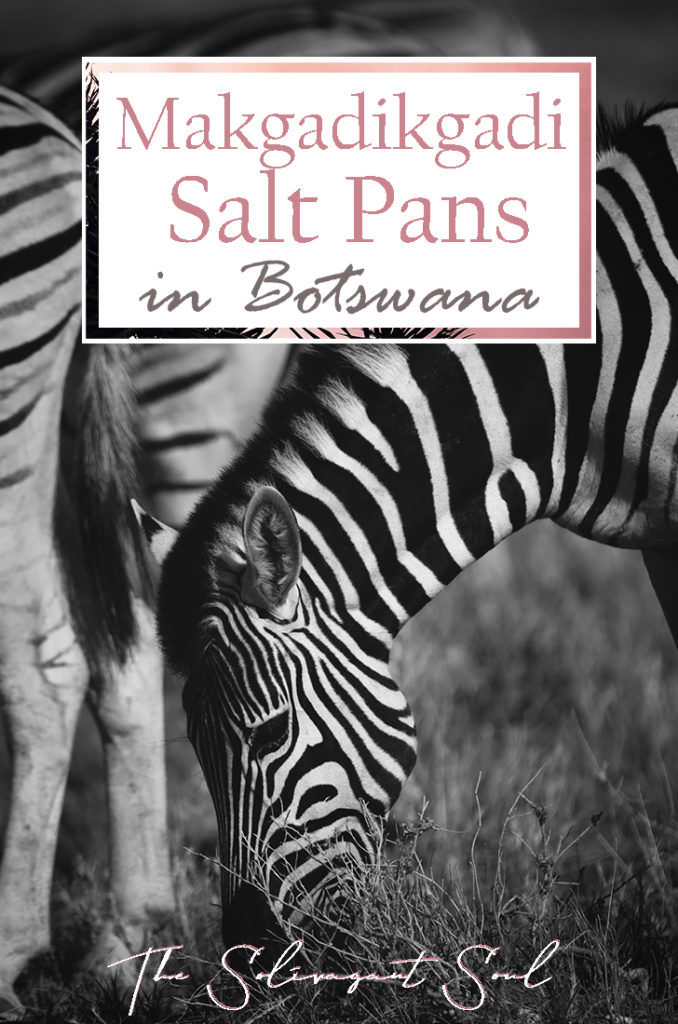
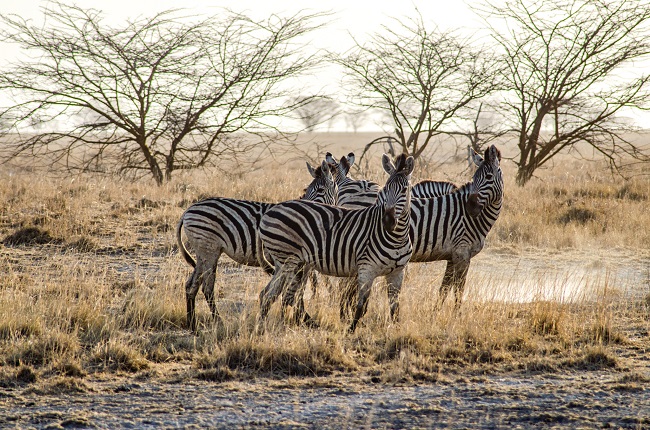
In summary, during our game drive in the Makgadikgadi Salt Pans in Nata, we saw a bunch of wildebeest, many zebras, a jackal, a few ostriches and antelopes, and the group of hippos. The landscape was quite dead, and the guide was terrible. Unfortunately, this was one of the worst game drives of the trip. And the first, and only time, I did not leave a tip.
Once the full group was back, we had dinner (stew with rice) and received the brief for the following day. It was going to be a long one. Tents were meant to be down by 5am so that we could leave by 5.30 after having had breakfast.
Showering with company
Knowing that everybody would want to shower that evening, I run to the showers. The drain wasn’t working and I ended up sharing the bath with two dead cockroaches. Disgusting, yes. But at least they were not scorpions! My race to the shower proved right though: there were more than 20 queueing after I finished my 3min shower.
Soon after that I left the showers to head to my tent. Curious about what we had missed that day, I decided to look for some information regarding the Makgadikgadi Salt Pans. And this is what I learned:
The Makgadikgadi Salt Pans covered an area that was one of the most fertile in the world. Over 200k years ago, the evolution of the homo sapiens as it is started there, in an area covered by trees, lakes and with lots of animals. Today, the Makgadikgadi Salt Pans is all that is left. During the wet season, a few flamingos migrate there and feed on the crustaceans hidden under the sand (we saw their feathers). But for most of the year, the Makgadikgadi Salt Pans are mostly and only that, a vast desert of salted land where mostly nothing grows and where there are barely any animals.
I would have loved to have more information on the Makgadikgadi Salt Pans when we were there. But according to the wiki, there’s really not much more to expect there in dry season anyways!
Happy to know then a bit more, I decided to go to bed and ended up falling asleep within minutes.
More about the Exploring Southern Africa
If you enjoyed this post, let me tell you something. This is one of the many entries of my travel journal across South Africa, Botswana and Zimbabwe. You can find all previous (and following) entries here. I hope with these I can take you on this amazing trip with me in a more personal way.
And please, share the love if you liked this article!



This looks like such a beautiful place! I have never been to Botswana but I have wanted to go for years. These photographs are all gorgeous and really capture the heart of the area. One day I will finally go!
Travel is not always just rainbows and unicorns and I love to read such stories 🙂 But all in all, I still think you had an interesting experience and were able to see those animals! 🙂
First off, these photos are INCREDIBLE. The sunset and zebra are amazing captures. Secondly, I enjoyed reading of Botswana and your adventures there, the good and bad. I’d much rather have a cockroach than a scorpion, that’s for sure!
Goodness it sounds like you had some truly stressful moments on this trip, but wowza! Your photos of the animals are spectacular!
It is so sad to hear how the Makgadikgadi Salt Pans used to be. I wonder if there is any way to restore the habitat to how it used to be hundreds of thousands of years ago…
WOW, I have never even heard of this place until now! Lovely pictures too 🙂
Sounds like you are good at dealing with roughing it. And the animals hopefully made it worth it!
A pool in the desert, I love it!! You also have some a nice pics!
This looks like an amazing destination to spot wildlife and capture them in their natural habitat!